
Finding Family Overseas: A Guide to Hiring Local Experts
Insights from 50 Years of Professional Genealogy
Your ancestors are from a country outside of the United States – now what?
If your ancestors are from European countries such as the United Kingdom, Scandinavia, Germany, France, Switzerland, Spain, Italy, or even Latin American countries such as Mexico and Brazil, you may be able to find records which have been microfilmed and available through FamilySearch.org and possibly indexed. However, even these countries have records not yet microfilmed which may be needed to solve a difficult family history problem.
And then there are countries in Eastern Europe, East Asia, and the South Pacific which often require local on-site research. You may think it’s the end of the genealogical road – but not so!
My ancestors outside of the United States are from England, Sweden, and Germany. For most, I have been able to utilize microfilm and indexed records. However, for Germany, I have needed someone who can access local archives. So, what can be done in these situations?
FIRST: You need to identify your ancestor’s place of origin.
Documents to examine include death certificates and obituaries for all known family members, headstones, naturalization records, and ship passenger lists. Researching neighbors and friends who were from the same home country may also reveal a town of origin. In addition, it is very helpful to know the religion of your ancestor. Looks for clues in obituaries and cemetery records. To learn more about the methodology of finding a place of origin, read our blog post Finding Your Irish Place of Origin.
NEXT: Once the specific place is known, learn what is available for that area.
The FamilySearch Wiki is helpful for learning what records are available in your ancestor’s home country, county or region, and parish/town/village. Additionally, searching the FamilySearch catalog for your specific village will reveal what records are microfilmed, digitized, indexed, and/or included in the full-text search. Keep in mind when searching villages that the church our ancestor attended may not be in the village where they lived.
To learn what archives and libraries are available for each country, the FamilySearch Wiki has a section called Archives and Library by Country. Email addresses are often included for the National archives of the country or even for local archives. This might be a good starting point to learn what is available at the archives and the procedure for requesting records.
For my Galley ancestors of Durham County, England, I used FamilySearch Wiki to explore the Archives and Library for Durham. A link to the Durham County Record Office helped me learn what records are housed there and their procedure for requesting a record search through their office.
To learn more about what churches were attached to certain villages within the German empire pre-World War I, consult the Meyers Gazeteer (https://www.meyersgaz.org/). I was able to determine my Steinbeigle (Steinbüchel) ancestors immigrated from Borbeck, Essen, Rhineland, Germany, and that my 2nd great grandparents Conrad Steinbüchel and Franziska Koch likely married about 1875 in Borbeck. They were Lutheran. I learned from the Meyers Gazeteer that there was both a Catholic and Lutheran parish church in Borbeck.
I then consulted the FamilySearch Catalog and learned that there were no church records available on microfilm for Borbeck, but there were civil records on microfilm beginning in 1874. However, these were only death records so would not help me with the marriage record or births of their children. I consulted the FamilySearch Wiki but could find nothing on Borbeck or Essen, so I did a search for Rhineland. Here I found a wealth of information on where to search for records online, as well as where and how to write to local repositories for records. See Rhideland (Rheinland) Archives and Libraries.
If a parish church is located but records are not available on line or microfilm, you might consider sending a letter to the church requesting information. The parish clerk may be willing to search for records, especially if a donation is offered.
FINALLY: Identify and reach out to a local agent.
If you learn that the records for your ancestor are not accessible on microfilm or online, it is time to find a researcher who can access those records on location. At Lineages, we have researchers here and abroad who can streamline that process for you.
Other places to find local foreign genealogical agents are on the ICAPGen.org or apgen.org websites. ICAPgen includes credentialled researchers who have proven they how to reliably use the records to prove family connections. Those on apgen are professional genealogists who may or may not be credentialled, but likely have the skills and experience necessary for what is needed in a particular country. I found a researcher located in Germany who knew of and could access little known records which named my ancestors and extended the line backwards and forwards.
Some countries are more difficult to find a local researcher. A very helpful page on the FamilySearch Wiki is Genealogy Research Groups which provides links to community, Facebook, and miscellaneous groups for almost every country you can think of. These groups are comprised of people who are inquiring about research in these countries, people who have experience finding records, and individuals willing to assist with research. I had success here when trying to locate a researcher who was knowledgeable about Vietnam and one who could help on location there.
The Middle East is generally difficult to research because of local laws. However, the FamilySearch Wiki is always a good place to start to learn what is available and any new programs which may have been started to assist in finding ancestors.
For countries which have few physical records, another less known feature is the more recent oral genealogies which have been started in Polynesia, Asia, and Africa. Information regarding these projects can be found at on the Oral Genealogies site on FamilySearch.
When a potential researcher is found, an email can usually be sent to that person to request information. You will want to first let the researcher know what you need (be specific) and ask if that is something the researcher can do. If not, ask for a referral to another researcher who might be able to help. It is also important to ask about their fees and how they would like to be paid. Generally, most researchers outside of the United States use PayPal. Some have U.S. accounts which also makes payment easier.
If you are stuck on some of your ancestral lines because the pedigree extends to a part of the world that doesn’t have microfilmed or online records, there is still hope! Use the processes above to identify researchers, archives, libraries, and churches that may be able to search the records for you. And if the process becomes too complicated, Lineages is always happy to assist! We excel in finding ancestors abroad, as well as those elusive ancestors closer to home.
Lineages Staff
Photo 1: Senior male archivist searching for catalogs, Canva Pro, public domain.
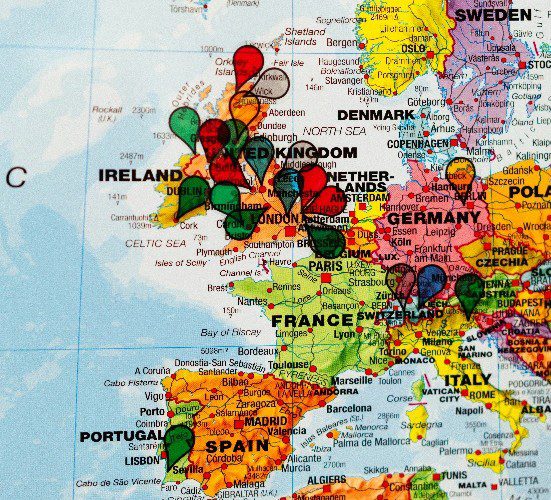
Photo 2: European map with pins, Unsplash, public domain.
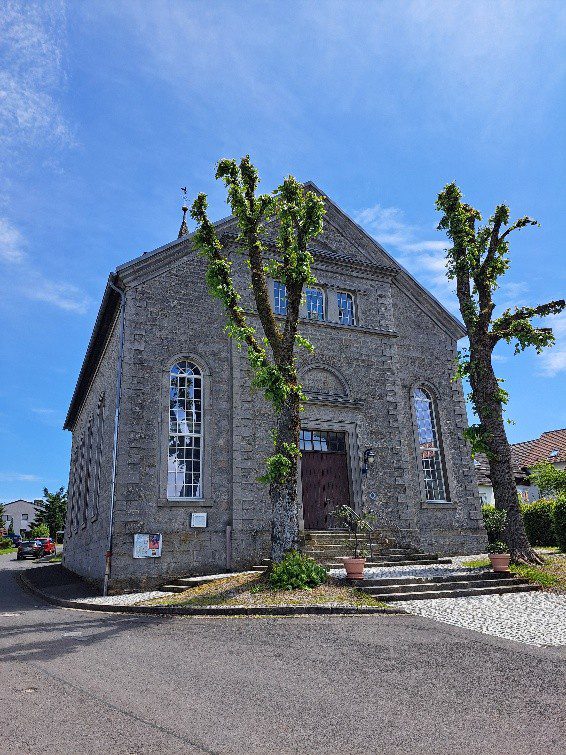
Photo 3: A church in Dalherda, Germany, original in possession of author.
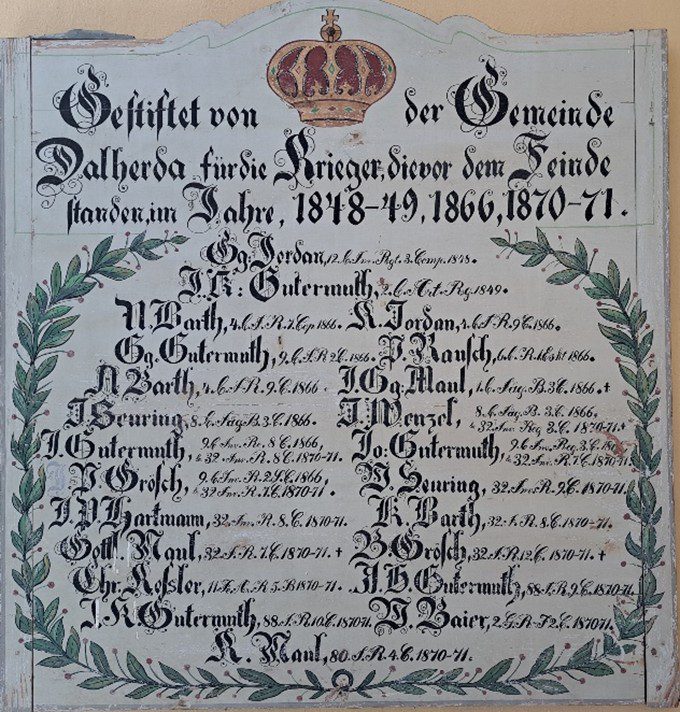
Photo 4: A record found in the church of Dalherda, Germany, , original in possession of author.